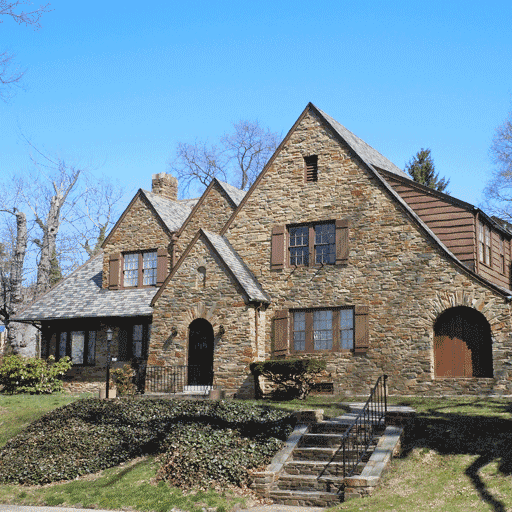
Historical landmarks throughout the country provide all citizens with a physical, present experience of our history. Through these landmarks you can not only observe but in many cases feel the original work and walk the spaces of the past. Historical homes help us remember important persons as we can view intimately how they lived; we get to see the most sacred of spaces, their internal sanctum, their home. Where did they read at night for inspiration, where did they write that novel, where did they meet the important guests and characters in their lives? All of these things we can glimpse through seeing history preserved in rock and mortar. Historical homes also allow us to visualize and experience architecture, culture, events and community history. They help tell the story of how our town and communities came to be and developed. This brief article will summarize how one protects a historical home. This will include how to register the home with the state and federal government. Also, we will look at incentives and resources aiding the owners in the task of preserving these properties. Additional links to state resources, historical homes for sale, historical home supplies and construction and spotlights of a few famous historical homes are also included. Even if you do not own a historical home, we welcome you to take a look into how these bits of our history are protected, preserved and continue to participate in and educate our communities.
Part I: Listing a Property as Historical
The National Historic Preservation Act of 1966 (amended in 1992) provides guidelines for federal, state and local governments to work with non-profit organizations and the public to preserve our historical places. The preservation is handled through the National Park Service which administers the National Register for Historic Places. Historical places can be buildings, structures, sites and objects that speak for American history, architecture/engineering, and culture. This can be as varied as a historic home to an archaeological site. A few places that are considered to represent the nation on a whole may also be registered in the National Historic Landmarks program; however, this membership is harder to obtain (there are only 2,500 of these sites nationally). Our concentration will be on the large listing (79,000 sites and growing) of the National Register.
So how does one determine if a site is historical? The National Register lists the following reasons for registering and protecting historical property:
The quality of significance in American history, architecture, archeology, engineering, and culture is present in districts, sites, buildings, structures, and objects that possess integrity of location, design, setting, materials, workmanship, feeling, and association, and:
A. That are associated with events that have made a significant contribution to the broad patterns of our history; or
B. That are associated with the lives of persons significant in our past; or
C. That embody the distinctive characteristics of a type, period, or method of construction, or that represent the work of a master, or that possess high artistic values, or that represent a significant and distinguishable entity whose components may lack individual distinction; or
D. That have yielded or may be likely to yield, information important in prehistory or history.
These four basic guidelines can encompass quite a bit of history. However, there are some limitations as well. Properties must be over 50 years old; to get a younger property registered an owner must prove "exceptional importance" such as might be recognized immediately for its reflection of an extraordinary political event or architectural innovation. Other limitations may include cemeteries, historical figures birthplaces and gravestones, religious structures, moved or reconstructed structures and commemorative structures. As with the 50 year rule there are exceptions for these limitations. In conclusion, if an individual or group feel a property meets the right criteria and should be registered they will need to nominate the property for review.
Any person or group may nominate properties for the National Register. Nominations, depending on the properties significance and location, are nominated through theState Historical Preservation Officer (SHPO), the Federal Preservation Officer (FPO)or the Tribal Preservation Officer (TPO). In most instances nominators will start with the SHPO for their state. The officer will then recommend the nominated property be reviewed by the state review board which consists of historians, architects, archaeologists and other professionals. The board then makes the recommendation to approve or disapprove the registration back to the SHPO. During the time the property is being reviewed, the public is notified the property may be registered. This may include the property owner, who may not have nominated the property themselves. If the owner at that time does not wish the property to be registered they can reject the proposal. The property will not appear on the national register, however, the nomination may be forwarded to the National Park Service only as a determination of eligibility in case a future owner would wish to have the property registered. Although the process varies from state to state, there is usually a minimum of 90 days to process. Once a recommendation is made to the National Park Service, the nominators will know the decision within 45 days. Once a property is registered the owner may expect some changes.
Owners of registered historical places may find both benefits and restrictions from state and federal programs. Surprisingly, on the federal level, once a home is registered owners may choose to change very little about their property:
Under Federal law, owners of private property listed in the National Register are free to maintain, manage, or dispose of their property as they choose provided that there is no Federal involvement. Owners have no obligation to open their properties to the public, to restore them or even to maintain them, if they choose not to do so.
However, state and local preservation laws may be more restrictive of what property owners may do once a the property is registered (the SHPO will have further details about the restrictions in your state). Some properties will obtain Federal historic preservation grant funding or investment tax credits for rehabilitation. Participation in these Federal programs may include more restrictions. As for changes to a structure or site, drastic alterations or physically moving a property when not absolutely necessary may effect the property's status. If, for example, the remodeling of the structure is enough to destroy and remove its historical significance, the property may be removed from the registry. Finally, a property may be affected by recommendation of the Advisory Council on Historical Preservation's recommendations at the federal level. However, inclusively, federal, state and local governments want to work with historical property owners to entice them to preserve our history. Property owners should contact the SHPO for more specific answers about local and federal benefits and restrictions.
Registering a home on the National Register for Historical Places is a relatively straight forward process. Contacting SHPO (or FPO or TPO) is the first step in reviewing what changes to expect and what forms need to be completed. With a little patience and research a home can be registered and protected as a part of our history. Now that it is registered, let us examine what resources are available for the renovation and upkeep of these places.
Part II: Resources for Historical Properties
The restoration of historical homes can be both overwhelming and expensive. Obtaining expert advise from contractors, architects, and historians (to name a few) can be invaluable to the homeowner. Research may be necessary to understand how the home looked, was furnished and functioned in the past. Also, it may be necessary to update older systems of plumbing, wiring, and replace lead-based paint (again, to name only a few). To begin the renovation process the home owner will first consider where the funding will come from, what projects need to be done, and finally, what the ultimate function of the historical home will be. There are many grants and sources of funds to help ease the impact of these improvement costs.
The funds available to owners of historical properties vary both nationally and locally. Nationally the most common is the Federal Historic Preservation Tax Incentive which entitles those qualified a 20% tax break. However, to obtain the credit the property does have to be used commercially for at least 5 years; usually as a rental or an apartment, in some cases use as an office may be sufficient. Local grants, loans and state tax incentives are not always available. To find what locally based programs there are contact your local government agencies such as the Historic Development Commission, Department of Planning and Economic Development, Housing and Redevelopment, and State Historic Preservation Office. When they are available the funds may come with certain restrictions or requirements. For example, some funds are only available to non-profit organizations or a grant may be offered that requires owners to share property with the public through tours or other educational outreach programs. Finally, involving family and community in the restoration project can help tremendously. Receiving help from the community may again mean opening up your home to educational programs or tours. However, when owning a historical home, sharing the history is part of the fun! So you have some money in your pocket; now you must decide what you want to restore first.
There may be many renovations needed for your historical home ranging from wiring to lead-paint removal. So overwhelming are the renovations at times that there is the tendency to over renovate homes. The National Trust for Historic Preservation has this top ten of Do's and Don'ts:
- Make every effort to use the building for its original purpose.
- Do not destroy distinctive original features.
- Recognize all buildings as products of their own time.
- Recognize and respect changes that have taken place over time.
- Treat sensitively distinctive stylistic features or examples of skilled craft work.
- Repair rather than replace worn architectural features when possible. When replacement is necessary, new material should match the old in design, composition, and color.
- Clean facades using the gentlest methods possible. Avoid sandblasting and other damaging methods.
- Protect and preserve affected archeological resources.
- Compatible contemporary alterations are acceptable if they do not destroy significant historical or architectural fabric. Build new additions so they can be removed without impairing the underlying structure.
Once you have clarified the tasks that need to be done, hiring a contractor, plumber, architect or electrician (to name a few) will be an important step in the renovation of your historical home. Make sure to take time to interview and speak with several professionals to find one with the most experience and knowledge about historical homes. Again, the National Trust for Historic Preservation has compiled good short summaries about choosing professionals. When making any renovations to the historic home it is important to keep in mind the purpose of the house. The functions of a historical home can be varried. For some home owners they simply want to renovate and enjoy the historical building as their home. When making improvements, owners will be more concerned about updating creature comforts and creating an esthetic environment for their family. On the other hand, some will choose to live in the historic home but also dedicate rooms or floors as public museums. When making renovations for these homes a balance should be kept between updating the living space that will be used while keeping museum spaces closer to the feel and accuracy of the time they represent. Brand new faucets upstairs in the family bath are great but a stainless steel countertop in a 19th century room may look a bit out of place. Finally, others will live in the historic house but also rent out rooms for guests and small conferences. Historic homes can make an ideal bed and breakfast. This may create additional renovation challenges such as access ability and practical updates for the comfort of guests (i.e. adding and updating a bathroom or two). However, owners will want to keep in mind the historic atmosphere of the home. Visitors are drawn to historical B&Bs because of the sense of walking into the past. Keeping antiques relevant to the time or using period correct wall treatments (i.e. wallpaper patterns) are just a few ways to help keep the historic feel of the home. If creating a bed and breakfast out of a historical home is the goal, then reading about the B&B business will be helpful. Whatever the function of the historical home, the project should remain fun and rewarding.
The restoration of a historic homes can be expensive and daunting. However, it is also very rewarding, a wonderful chance for connecting to the past and community (and can be a great home too!). Whether your historic building will be a home, museum, B&B or all the above, having a game plan before starting renovations is a great idea. Make sure the plan protects the hisotry of the home so that the character and craftsmenship of the home is not lost in the renovation. Enlisting professionals and the community will help. In the end it really can be very rewarding!
Conclusion
A lot can be said for the structures a society builds. When looking at buildings from the past one can get a sense of style, comfort and culture from previous generations. A family and/or a community may learn more about where they came from. To preserve historical homes, individuals or communities need to take the time to submit the home to the National Register for Historical Places. Once this is done the home may still be used for varying purposes from a living space to a museum. In some cases funding is available to help in the daunting task of renovation. In the end historical homes are a tough investment that with a bit of research can turn in to a rewarding home and much more.
Resources by State
Alabama | Alaska | Arizona | Arkansas | California | Colorado | Connecticut | Delaware | District of Columbia Florida | Georgia | Hawaii | Idaho | Illinois | Indiana | Iowa | Kansas | Kentucky | Louisiana | Maine | Maryland Massachusetts | Michigan | Minnesota | Mississippi | Missouri | Montana | Nebraska | Nevada | New Hampshire New Jersey | New Mexico | New York | North Carolina | North Dakota | Ohio | Oklahoma | Oregon Pennsylvania | Rhode Island | South Carolina | South Dakota | Tennessee | Texas | Utah | Vermont | Virginia Washington | West Virginia | Wisconsin | Wyoming
Alabama
State Historic Preservation Officer: Elizabeth Brown AL Historical Commission 468 South Perry Street Montgomery, Alabama 36130-0900 (334) 242-3184 Alabama Register Coordinator: Dorothy Walker - dwalker@preserveala.org National Register Coordinator: Christy Anderson - canderson@preserveala.org www.preserveala.org
Alaska
State Historic Preservation Officer: Judith E. Bittner - judyb@dnr.state.ak.us Department of Natural Resources Division of Parks and Outdoor Recreation 550 W 7th Avenue, Suite 1310 Anchorage, Alaska 99501-3565 (907) 269-8721 www.dnr.state.ak.us/parks/oha/index.htm
Arizona
State Historic Preservation Officer: James W. Garrison - jgarrison@pr.state.az.us Office of Historic Preservation Arizona State Parks 1300 W. Washington Phoenix, Arizona 85007 (602) 542-4174 National Register Coordinator: Kathryn Leonard www.pr.state.az.us/partnerships/shpo/shpo.html
Arkansas
State Historic Preservation Officer: Cathie Matthews - cathiem@arkansasheritage.org Department of Arkansas Heritage 323 Center Street, Suite 1500 Little Rock, Arkansas 72201 (501) 324-9162 National Register Coordinator: Ralph Wilcox - ralph@arkansasheritage.org www.arkansaspreservation.org
California
State Historic Preservation Officer: Milford Wayne Donaldson - mwdonaldson@parks.ca.gov Office of Historic Preservation Department of Parks and Recreation P.O. Box 942896 Sacramento, California 94296-0001 (916) 653-9125 http://ohp.parks.ca.gov/
Colorado
tate Historic Preservation Officer: Georgianna Contiguglia Colorado History Museum 1300 Broadway Denver, Colorado 80203-2137 (303) 866-3395 Information: oahp@chs.state.co.us www.coloradohistory-oahp.org
Connecticut
State Historic Preservation Officer: John W. Shannahan Connecticut Historical Commission 59 South Prospect Street Hartford, Connecticut 06106 (860) 566-3005 Information: cthist@neca.com www.cultureandtourism.org (This website is being revised; check out the CT Trust for more information at www.cttrust.org)
Delaware
State Historic Preservation Officer: Timothy A. Slavin Division of Historical and Cultural Affairs 21 The Green, Suite B Dover, Delaware 19901 (302) 739-5313 www.state.de.us/shpo/default.shtml
District of Columbia
State Historic Preservation Officer: Lisa Burcham DC Office of Planning, Historic Pres. Division 801 North Capitol Street, N.E. 3rd Floor Washington, D.C. 20002 (202) 442-8850 http://planning.dc.gov/
Florida
Actg. State Historic Preservation Officer: Frederick Gaske - fgaske@mail.dos.state.fl.us Division of Historical Resources R.A. Gray Building 500 S. Bronough Street Tallahassee, Florida 32399-0250 (850) 245-6300 www.flheritage.com
Georgia
tate Historic Preservation Officer: Ray Luce - ray_luce@dnr.state.ga.us Department of Natural Resources 156 Trinity Avenue, SW Suite 101 Atlanta, Georgia 30303-3600 (404) 651-5061 http://hpd.dnr.state.ga.us/
Hawaii
State Historic Preservation Officer: Peter T. Young Department of Land and Natural Resources 601 Kamokila Boulevard Room 555 Kapolei, Hawaii 96707 808-587-0401 www.hawaii.gov/dlnr
Idaho
State Historic Preservation Officer: Steve Guerber - steve.guerber@ishs.idaho.gov State Historic Preservation Office 210 Main Street Boise, Idaho 83702-7264 (208) 334-3890 www.idahohistory.net
Illinois
State Historic Preservation Officer: William L. Wheeler - Ted_Lild@ilpa.state.il.us Illinois Historic Preservation Agency Preservation Services Division One Old State Capitol Plaza Springfield, Illinois 62701-1512 (217) 785-9045 www.state.il.us/HPA/
Indiana
State Historic Preservation Officer: Jon Charles Smith- jsmith@dnr.in.gov Department of Natural Resources 402 W. Washington Street, Rm W274 Indianapolis, Indiana 46204 (317) 232-4020 Information: dhpa@dnr.state.in.us www.state.in.us/dnr/historic/
Iowa
Actg. State Historic Preservation Officer: Anita Walker - anita.walker@dca.state.ia.us State Historical Society of Iowa 600 East Locust Street Des Moines, Iowa 50319-0290 (515) 281-8741 www.iowahistory.org
Kansas
State Historic Preservation Officer: Jennie Chinn - jchinn@kshs.org Kansas State Historical Society Cultural Resources Division 6425 Southwest 6th Avenue Topeka, Kansas 66615-1099 (785) 272-8681 Information: histsoc@acc.wuacc.edu www.kshs.org
Kentucky
State Historic Preservation Officer: David Morgan - davidl.morgan@ky.gov Kentucky Heritage Council 300 Washington Street Frankfort, Kentucky 40601 (502) 564-7005 www.state.ky.us/agencies/khc/khchome.htm
Louisiana
Division of Historic Preservation Office of Cultural Development P.O. Box 44247 Baton Rouge, LA 70804 (225) 342-8160 National Register Coordinator: Donna Fricker National Register Section (1st time inquiries): Patricia Duncan www.louisianahp.org
Maine
Director: Earle G. Shettleworth, Jr. - Earle.Shettleworth@Maine.gov 55 Capitol Street, State House Station 65 Augusta, Maine 04333-0065 (207) 287-2132 / Fax (207) 287-2335 www.state.me.us/mhpc/
Maryland
State Historic Preservation Officer: J. Rodney Little - RLittle@mdp.state.md.us Division of Historical and Cultural Programs 100 Community Place Crownsville, Maryland 21032-2023 (410) 514-7600 or 1-800-756-0119 www.marylandhistoricaltrust.net
Massachusetts
Secretary of the Commonwealth Massachusetts Historical Commission 220 Morrissey Boulevard Boston, MA 02125-3314 (617) 727-8470 www.sec.state.ma.us/mhc/mhcidx.htm
Michigan
State Historic Preservation Officer: Brian D. Conway - conwaybd@michigan.gov State Historic Preservation Office P.O. Box 30740 702 West Kalamazoo St. Lansing, Michigan 48909-8240 (517) 373-1630 www.michigan.gov/hal/
Minnesota
Department Head and Deputy State Historic Preservation Officer: Britta L. Bloomberg - britta.bloomberg@mnhs.org Historic Preservation, Field Services and Grants Department Minnesota Historical Society 345 W. Kellogg Blvd. St. Paul, MN 55102-1906 (651) 296-5434 www.mnhs.org/shpo/
Mississippi
Mississippi Department of Archives and History 200 North Street Jackson, MS 39201 (601) 576-6850 Historic Preservation Division: msshpo@mdah.state.ms.us www.mdah.state.ms.us/index.html
Missouri
Deputy State Historic Preservation Officer: Mark Miles - mark.miles@dnr.mo.gov Department of Natural Resources P. O. Box 176 Jefferson City, MO 65102 (573) 751-7858 www.dnr.state.mo.us/shpo/index.html
Montana
State Historic Preservation Officer: Mark Baumler, Ph. D. - mbaumler@mt.gov The Montana Historical Society 225 N. Roberts P.O. Box 201201 Helena, MT 59620-120 (406) 444-7715 www.his.state.mt.us
Nebraska
State Historic Preservation Officer: Lawrence J. Sommer
Nebraska
State Historical Society 1500 R Street P.O. Box 82554 Lincoln, Nebraska 68501 (402) 471-4746 Information: nshs@nebraskahistory.org www.nebraskahistory.org/histpres/
Nevada
tate Historic Preservation Officer: Ronald M. James - rmjames@clan.lib.nv.us Department of Cultural Affairs 100 North Stewart Street Carson City, Nevada 89701-4285 (775) 684-3440 http://dmla.clan.lib.nv.us/docs/shpo/
New Hampshire
State Historic Preservation Officer: James M. McConaha - James.Mcconaha@dcr.nh.gov Division of Historical Resources P.O. Box 2043 Concord, New Hampshire 03302-2043 (603) 271-6435 www.nh.gov/nhdhr/
New Jersey
State Historic Preservation Officer NJ Department Parks & Forestry P.O. Box 304 Trenton, New Jersey 08625-0404 (609) 292-2885 www.state.nj.us/dep/hpo/
New Mexico
State Historic Preservation Officer: Katherine Slick - katherine.slick@state.nm.us Office of Cultural Affairs Villa Rivera Building, 3rd Floor 228 E. Palace Avenue Santa Fe, New Mexico 87503 (505) 827-6320 www.nmhistoricpreservation.org
New York
State Historic Preservation Officer Office of Parks, Recreation and Historic Pres. Empire State Plaza Agency Building 1, 20th Floor Albany, New York 12238 (518) 474-0443 http://nysparks.state.ny.us/shpo/
North Carolina
State Historic Preservation Officer: Jeffrey J. Crow - jeff.crow@ncmail.net Department of Cultural Resources Division of Archives and History 4617 Mail Service Center Raleigh, North Carolina 27699-4617 (919) 733-7305 www.hpo.dcr.state.nc.us
North Dakota
State Historic Preservation Officer: Fern E. Swenson State Historical Society of North Dakota ND Heritage Center 612 East Boulevard Avenue Bismarck, North Dakota 58505-0830 (701) 328-2666 www.state.nd.us/hist/
Ohio
State Historic Preservation Officer: Rachel Tooker - rtooker@ohiohistory.org Ohio Historic Preservation Office Ohio Historical Society 567 E. Hudson Street Columbus, Ohio 43211-1030 (614) 298-2000 www.ohiohistory.org/resource/histpres/
Oklahoma
State Historic Preservation Officer: Melvena Heisch - mheisch@ok-history.mus.ok.us Oklahoma Historical Society Wiley Post Historical Building 2100 N. Lincoln Boulevard Oklahoma City, Oklahoma 73105 (405) 521-2491 www.ok-history.mus.ok.us
Oregon
Deputy State Historic Preservation Officer: Roger Roper Heritage Programs Division Oregon Parks and Recreation Department 725 Summer Street, Suite C Salem, Oregon 97301 (503) 986-0677 http://www.oregonheritage.org
Pennsylvania
State Historic Preservation Officer: Barbara Franco Bureau for Historic Preservation Commonwealth Keystone Building, 2nd floor 400 North Street Harrisburg, Pennsylvania 17120-0093 (717) 787-2891 www.phmc.state.pa.us
Rhode Island
State Historic Preservation Officer: Edward Sanderson - esanderson@preservation.ri.gov Hist. Preservation and Heritage Commission Old State House 150 Benefit Street Providence, Rhode Island 02903 (401) 222-2678 www.preservation.ri.gov
South Carolina
State Historic Preservation Officer: Mary W. Edmonds - edmonds@scdah.state.sc.us Department of Archives and History 8301 Parklane Road Columbia, South Carolina 29223-4905 (803) 896-6168 www.state.sc.us/scdah/histrcpl.htm
South Dakota
State Historic Preservation Officer: Jay D. Vogt - jay.vogt@.state.sd.us South Dakota State Historical Society 900 Governors Drive Pierre, South Dakota 57501-2217 (605) 773-3458 www.sdhistory.org
Tennessee
State Historic Preservation Officer: Herbert Harper - Herbert.Harper@state.tn.us Department of Environment and Conservation 2941 Lebanon Road Nashville, Tennessee 37243-0442 (615) 532-0109 www.tennessee.gov/environment/hist/
Texas
State Historic Preservation Officer: Lawerence Oaks - l.oaks@thc.state.tx.us Texas Historical Commission P.O. Box 12276 Capitol Station Austin, Texas 78711-2276 (512) 463-6100 www.thc.state.tx.us
Utah
State Historic Preservation Officer: Wilson G. Martin - wmartin@utah.gov Utah State Historical Society 300 Rio Grande Salt Lake City, Utah 84101 (801) 533-3500 http://history.utah.gov
Vermont
State Historic Preservation Officer: Jane Lendway - jane.lendway@state.vt.us Agency of Commerce & Community Dev. VT Division for Hist. Preservation National Life Bldg., Drawer 20 Montpelier, Vermont 05620-0501 (802) 828-3056 www.historicvermont.org
Virginia
State Historic Preservation Officer: Ann Andrus - ann.andrus@dhr.virginia.gov Department of Historic Resources 2801 Kensington Avenue Richmond, Virginia 23221 (804) 367-2323 www.dhr.virginia.gov
Washington
State Historic Preservation Officer: Allyson Brooks - Allyson.Brooks@dahp.wa.gov Office of Archeology & Historic Preservation 1063 S Capitol Way Suite 106 P.O. Box 48343 Olympia, Washington 98504-8343 360-585-3066 www.oahp.wa.gov
West Virginia
State Historic Preservation Officer: Susan Pierce - susan.pierce@wvculture.org Division of Culture and History 1900 Kanawha Boulevard E. Capitol Complex Charleston, West Virginia 25305 (304) 558-0220 www.wvculture.org/shpo/shpoindex.aspx
Wisconsin
State Historic Preservation Officer: Michael E Stevens Wisconsin State Historical Society 816 State Street Madison, Wisconsin 53706-1482 (608) 264-6500 www.wisconsinhistory.org
Wyoming
State Historic Preservation Officer: Sara Needles - sneedl@state.wy.us Wyoming State Historic Preservation Office Dept. of State Parks & Cultural Resources 2301 Central Avenue, 3rd floor Cheyenne, Wyoming 82002 (307) 777-7697 http://wyoshpo.state.wy.us/