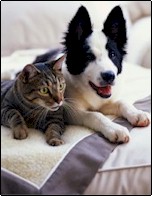
For many, bringing a pet home is the same as bringing home new family. Pets easily find their way in our hearts with their playful antics and friendly companionship. When you first bring a new pet into your home it is imperative that you are willing to make some adjustments to your living space. This article is aimed at giving hints for all who have pets or will have pets in their home. Preparing your home and yard for your new pet is important to their well being and your ease of mind. The focus will be discussing animals that are out most of the time, like cats and dogs, that are more likely to get into some mischievous fun. However, many of these tips and hints will work for most of the four legged friends we bring into our home. Most of the tips will seem like common sense, however, when the new pet is roaming around it may slip our mind to check for common place hazards. Many times we take for granted that things are safe or wouldn't interest animals. However the puppy running down the hall with a roll of toilet paper would beg to differ!
So let's get your home and yard ready so it is safe for your pets (and also not a free going playground waiting for destruction and mayhem)!
Part I: Preparing Your Home
When bringing a new pet to the home the last thing anyone wants to think about is cleaning and proofing their home. However, taking a little time to do so will prevent headaches and possible heartaches. It will keep your pet, prized possessions and your sanity intact. This is true whether you are bringing home a new pet or adjusting an older one to a new home. Or, perhaps, you find your self in the unfortunate situation of losing possessions to a pet who has never had boundaries set up in your home. Whatever your reason, these tips will help proof your home for the new, old and mischievous pets in your life.
Think Below the Knees
Get down on all fours and look around at the same level as your pet. There is a whole other world down at their viewpoint!
- Think low! Remove objects on low shelves, coffee tables, and anywhere else that is easy access. Anything destructible, such as paper, books, anything made of cloth (i.e. laundry). It is much easier to 'chew train' a pet if they do not learn a bad habit of "where to look" for destructible goodies when you aren't looking.
- Also think about food and snacks. Don't leave pop cans, candy wrappers, crumbs or anything else on a low counter. Leaving out these delicious tidbits can easily lead to "counter surfing".
- Since kittens and ferrets may actually have the ability to walk on your counters, make certain to keep an eye on them when cooking. You may have food on the counter and the stove burners on - both can be dangerous. If you are a messy chef you may have a very happy kitty, but it could be dangerous if you don't keep an eye on them!
- Speaking of food and snacks, make sure if you have smaller pets, like mice, that they are out of reach to your new puppy or kitten. Don't forget your fish - sometimes the idea that the aquarium is invincible can be tested.
- Smokers - do not leave cigarette butts where pets may reach them. If eaten it can lead to nicotine poisoning and the filters aren't good on the digestive system.
- Children's toys can be great fun for pets too! Make sure your kids realize they may loose their toy if it is left out and unattended. Also many toys may have small parts or can be easily broken into small parts by your pet which can be dangerous.
- Overall keep you place picked up of daily messes. For example: Newspaper whether read or not is still fun to shred and eat. (Same goes for the mail!) Just got home from shopping? Put away the bags! Plastic bags can be either chewed and swallowed (pups) or can suffocate some pets accidentally (kittens & ferrets).
- Sometimes pets will eat something that will require surgery to remove. Small objects to watch out for include rubber bands, balloons, beads, buttons, Q-tips, sewing needles, thread, staples, string, pantyhose and coins - to name a few!
- Medication should never be left around the house. Make sure it is secure - just like with children!
- Keep heating vents covered. Many pets love to snuggle up to these and you don't want your pet falling in.
- Smaller pets like ferrets should be blocked off from holes and other hideaways - you don't want them to find a comfy spot and not come out! Also be certain to check under recliners before moving them as your pet may find it a nice place to hide out.
- Plants should be moved to higher ground or blocked. Watch out for vine plants that your pet might grab and bring the whole thing down. * Some household plants are poisonous to pets. Here are a few: aloe vera, amaryllis, caladium, holly berries, lilies, mistletoe, mums, and poinsettias. For a complete listing check out the Poisonous Plants resource links.
Playtime!
Unless they are sleeping, or eating, they are playing!! Some tips to make this non-stop action fun and safe for both of you!
- Keep an eye on your pet at play with certain toys. Some toys don't hold up to your pets hunting prowess and become shredded in no time. Toys with squeakers are fun but many pets will work hard to remove them if your not watching. Just keep in mind if you are in the other room, you may never see them devour their cut up prey! A solution would be have toys for when you can see them and more durable toys for when they are in the yard, other room, or you are not at home.
- Also watch older toys. If they don't fall apart they may actually be warn into sharp edges, don't let your pet play with damaged toys, they can cut themselves easily. Look before you step when playing with all our small pets. Try this pattern "Turn, Look, Step"
- Some small animals such as rabbits are chewers and it normal to give them various chew toys such as: Cardboard boxes, empty oatmeal containers, bird toys, cardboard paper towel rolls, things to shred. Try to keep them away from your wooden furniture - they love wood! Instead wood sticks are available at pet stores.
Road Blocks
If they can't reach it, they can't eat it, scratch it, or all out destroy it!
- Don't forget the garbage! Take the garbage outside or make sure you can close it away in a closet/room where pets cannot reach it. Not only will they make a mess rifling through all the goodies they can also hurt themselves if there are any rough objects they rifle through.
- Keep some rooms closed. It is perfectly reasonable for there to be certain rooms that pets may not visit unless supervised. One obvious choice would be the bathroom (remember that puppy running down the hall with toilet paper - cute - but after the 20th time said pup turns from cutie to lil'-demon). If you don't have a door to a particular area look into getting a child gate or blocking it off with other materials. If you have a mixture of pets you may not want them to be able to access certain areas of each others space. A prime example is keeping kitty litter from dogs, some seem to find the "deposits" tasty snacks. In this instance you can set up a roadblock for the dog that the cat can still easily climb over.
- If your pet is especially good with its nose or paws you may want to get childproof latches. They will work well to keep them out of lower cabinets in your home.
- Keep the lid down on the toilet, especially if you use strong cleaners. Small, curious pets may fall in and pets taking a drink can be poisoned by cleaners - some of them even contain anti-freeze!
- Speaking of cleaners, here are some examples of cleaners that are really dangerous to your pets (to name a few!): ammonia, bleach, disinfectants, drain cleaner, oven cleaner, paint, rat/bug poison.
- Keep electric cords out of reach or secure them to baseboards. When first home keep an eye on where your pet is at all times. Some may try chewing on the cords. You can deter this with a taste deterrent like "Bitter Apple", a mix of vinegar and water, or hot sauce. Or even better, block access to them altogether.
- Speaking of cords, watch those drapery cords as well. Tie them up so all your window treatments aren't pulled to the ground.
- Many animals are attracted to fire. The light of a candle or the heat of a fireplace will peak their interest. Make sure candles are never left unattended. For the fireplace make sure Fluffy knows just how close they are allowed to get for a good snooze - warm is good, singed is bad.
- Keep the upstairs windows and any cellar doors shut. Young pets are just like children with their curiosity but can easily misstep and fall.
- Be careful when working in the garage. It is best to keep them out and make sure you clean up thoroughly! Such toxins like anti-freeze are very lethal to pets - a drop the size of a dime can be lethal! (You hear a lot about anti-freeze, not only is a small amount incredibly lethal, anti-freeze is also sweet smelling and tasting to pets - they will seek it out!!)
- Watch our for open dresser drawers, closets and other nice dark places, kittens are especially curious and many are drawn to these make-shift dens. Have you heard about the kitten jumping in the dryer? Its not a urban legend, be alert and check before you shut the door.
- Another warm place kittens like to snuggle is on a car engine. If your kitten has access to your car (or the neighborhood cat for that matter) it may help pound on the hood of your car and honk you horn. If you don't want to do this every day try to limit access to your car.
- One of my favorite words of advice when watching out for the sleeping kitten: "Locate your kitten before you sit down on the sofa or use the recliner." (Of course, depending on your house rules, that may go for your other pets too!)
Table Manners
Don't feed table scraps to your pets. Many times people don't realize that some foods okay for us can be toxic or hard on the system for animals.
Some foods to be aware of: Alcohol, Chicken & Turkey Bones, Nutmeg, Apples (stems & seeds), Chocolate, Onion Apricots (seeds), Coffee (grinds & beans), Peaches (seeds), Avocados, Dairy Products (large amounts), Pears, Baking Powder, Fatty Foods, Plums, Baking Soda, Garlic, Potatoes (peelings & green,) Broccoli (large amounts, )Grapes, Raisins, Cherries (stems & seeds), Macadamia Nuts, Yeast, **Tobacco, although not a food, ingestion can be poisonous
Holiday Playground
The holidays are fun for everyone - including your pets!
- Decorations should be up high or in rooms that pets have limited access.
- Any holiday lights should be treated the same as other electrical cords. Get it out of the way or secured so your pets don't accidentally trip over them. Also keep a lookout and make sure they do not chew on them; again a taste deterrent like "Bitter Apple" will work.
- Other holiday items to keep from you pets include: metal ornament hooks, popcorn strands, tinsel, angel hair (it is spun glass), and decorative artificial snow or tree flocking - to name a few.
- Don't forget that holiday plants like holly berries, mistletoe, and poinsettias are poisonous!
- Fourth of July fireworks are fun for us but many pets find all the racket frightening. One suggestion is to have treats nearby and give them treats whenever there is "Boom!" so they associate the noise with happier things (mostly used for dogs). Another thing to keep in mind if you are leaving for the festivities, don't leave pets alone out in the backyard. They may panic and do things they normally wouldn't do like digging their way out!
- Many holidays include house guests that are not familiar with your pet or household rules. After introducing your guest to your pet, make certain you let your guests know not to leave doors open, feed table scraps or any other important household rules. If there are a lot of guests you may want to arrange a quiet place for your pet to retreat.
Home Alone
What do they do when you leave the home? Preferably it doesn't involve eating the couch!
- Before you leave for a long day at work it is important your pet is calm. For dogs a good walk in the morning may be necessary. For cats a little play time will help with bonus energy. Teach your pet tricks and have them perform for you before you head out. Our pets sleep more then we do and getting rid of morning energy will help them settle for a nap while your out earning money to spend on them.
- If you have a really active breed you may want to look into a dog daycare or walking service for a couple days out of the week. Taking your dog to a pet daycare is like taking them to camp. They get to romp with other dogs and usually come home tired and ready for a good night sleep. Many find that a few days out of the week is enough to hold them over on the days in-between.
- Crates can be lifesaver when you are gone. If you have pet that is still undergoing training and is not sure of all the rules, a crate or restricted room is a must.
Cautionary tale on the restricted room - we placed one of our pups in a room in our house as we went out to get a bite to eat. There was no furniture in the room except for her crate with her toys. When we came back she had climbed the crate and chewed the metal blinds on the window and also proceeded to dig up part of the carpet!
Part II: Preparing
Your yard is fun place for you and your pet to enjoy the outdoors. Maintaining your yard for your pet is relatively easy. There are some hazards that you will want to watch for and prevent. Not all of your pets may enjoy your yard to its fullest, some may stay in pens or restricted kennel/runs. The tips below address pets that have more freedom. These pets roam a fenced backyard or around the perimeter of your house (i.e. Dogs & Cats). In addition to proofing tips we offer some ideas about making your yard more enjoyable. Sometimes you may have a small space or areas you really don't want Fido to excavate. Read on for a checklist of ways to make your yard safe and entertaining for your pets.
Yard Maintenance
When maintaining your yard you want to keep your pets in mind.
- When working on the yard keep pets indoors. Our dogs like to chase the lawnmower - bad idea - so they now watch from inside. Some pets may be just the opposite and try either to attack the mower or try to escape in a panic - equally bad idea. Besides the lawnmowers, trimmers, leaf blowers, chainsaws, and other loud tools should not be used when pets are around.
- Be careful with other tools such as shovels, rakes, spades, etc. Some pets may try to "help" you do the yard work and can inadvertently be struck by these items.
- Review the chemicals you use on your yard. Weed killers, bug killers/bait and other chemicals can be poisonous to your pets as well. Some you may still be able to use, however, you may need to let the yard sit for x amount of hours before letting your pets back out. Symptoms of poisoning usually include: vomiting, diarrhea and sometimes convulsions or unconsciousness.
- Keep your yard clean of waste. Especially with puppies, they can get in the habit of eating their waste. Besides, you will both enjoy your yard much better if it is not covered in poo mines! For cats you should have an outdoor litter box. This will be easier to clean and prevent the cat from laying waste to your (or your neighbor's) flowerbeds.
- Remove any ladders, tools or stacked piles (i.e. wood), etc. that young pets may try to climb or knock over. If you do keep the stacks in your yard, check that they are secure and cannot roll onto your pet. Consider carefully what you plant in your yard. Plants that can cause complications include: Rhododendron, Japanese Yew, Lilly of the Valley, Peach and Cherry Trees (pits) to name a few. See our links to Poisonous Plants for more details.
- You may want to try to keep your yard clear of the bee family by getting rid of nests on your property. Your dog cannot escape bees flying through the yard, but cutting down their numbers may help. All dogs are naturally allergic to bee stings. Depending on the location of the sting they may have to visit the vet for medication. If it is on the mouth/head it can lead to swelling and difficulty breathing.
The Kingdom
Your pets will make your yard into their own domain. Make sure their kingdom is safe and enjoyable.
- Check the fence of the yard for holes or gaps that may be an easy escape. Make sure your gates are locked and secured and guests and children know to do so as well.
- It is best not to have any young pets around water unattended. If you have a pool or pond make sure to watch them around this area carefully. Some trainers even suggest teaching pets how to get out of the pool or pond early on, sort of a "Swimming 101" for the pet in case they get into trouble when your back is turned. If your pet does get into a pool, make sure they get a bath so none of the harsh chemicals can effect their skin and coat.
- Most pets are sun lovers. If your pet likes to "sunbathe" keep an eye that they don't get too hot. Signs of heat exhaustion include: restlessness, panting excessively and drooling. The worst case scenario is the pet collapsing and eventually falling into a coma. To counter it, wrap them in a damp cool (not cold) towel and go to your vet or animal hospital. In hot weather keep plenty of water. Refresh and refill it often. If you keep food outside as well make sure it does not sit too long. The heat may cause it to spoil and flies may contaminate it.
- Make sure you have shade in your yard. You may even want to add a structure such as a doghouse for your pup to rest
- Ask your vet to recommend a flea & tick prevention plan right for your pet. Depending on how much your pet is outside, where it goes, etc. you may need more preventive tools. It is imperative you ask your vet as many medicinal solutions are measured by your pets size, weight, age, etc.
- Your pet may like to make or find a burrow to rest in. Block off crawl spaces under sheds or decks. You don't want them to get trapped or hurt by any debris you cannot see underneath.
Ideas for your Pet Friendly
Yard Below are just a few ideas of things you may do to improve your yard for your pet.
- Placing markers around your yard for your dog to potty on or for your cat to scratch on can help save some of your other trees. Start by blocking the trees you want to save and place toys or treats by the markers you want them to use. Eventually you can train you pet to have a habitual like for that particular log(s)!
- Prepare digging spots for your pets. For your dog it can be a small area of dirt and sand where you keep toys to encourage him to be there. For cats you can have one container/pot with catnip or another enticement. By keeping them interested in their designated digging spot they will learn to have fun there and leave the rest of your yard alone (most of the time!).
- If you don't want your dog in your flower bed try a wooden or stone fence. Some dogs will learn to stay out of the area due to the road block, however you may need to supplement the roadblocks with additional training.
- Dogs are going to do their rounds around "their" territory. This will leave worn paths in the grass. You may want to lay a nice stone path on their route to beautify it.
- Continuing with a dogs tendency to make paths, for smaller yards you can make a maze path for them. Using placing flowerbeds and other structures you can create a winding route for them for their territorial routine.
Conclusion
Pets are a wonderful addition to the family and home. Taking time to proof your house and yard will make both of your lives a lot easier. It may seem daunting at first that there are so many things to do for or keep away from your pets. However, after a while your pets will learn the house rules. You may even be able to reclaim certain areas of the house as your pet matures and understands not to destroy your things. For example, our dogs don't touch the laundry anymore and we can leave books on low shelves without them getting even a sniff of interest. You will find many of the hazards you watch for you will begin to do so naturally. Eventually you won't even realize your new habits. It is simply part of the lifestyle change that happens as it is always an adjustment to bring animals into our home. Just know that you can be pro-active, you'll have far fewer headaches in the long run and in the end you will have great company and lots of fun!