home check map image

Search such categories as , , ,

searchPage

, ,

searchPage

, , , ,

searchPage
Featured Articles

Pet Friendly Home by Homecheck

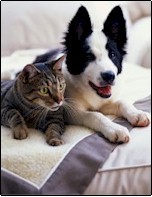
For many, welcoming a pet into the home is as joyous and significant as bringing home a new baby from the hospital.

Article Thumbnail Small

For many, welcoming a pet into the home is as joyous and significant as bringing home a new baby from the hospital. Pets easily find their way into our hearts with their playful antics and friendly companionship. When you decide you are ready for the responsibility of caring for a pet, it is imperative that you are willing to make adjustments to your living space. Preparing your home, pantry, and yard for your new pet is important to their well being and your ease of mind. This article offers pointers to those who are considering adopting a companion animal, or those who already have pets. Although the article focuses primarily on cats and dogs, many of the tips will work for most four legged friends. The tips may seem like common sense, but it may slip your mind to check for commonplace hazards when a new pet is underfoot exploring its' new surroundings. Many times we take for granted that things are safe or would be of no interest to animals. However, that adorable puppy running down the hall with toilet paper streaming behind him would beg to differ!

Part I: Preparing Your Home

When bringing a new pet home, the last thing anyone wants to think about is cleaning and proofing their home. However, taking a little time to do so will prevent headaches and possible heartaches. It will keep your pet, your prized possessions, and your sanity intact. This is true whether you are bringing home a new pet or adjusting an older one to a new home. Or, perhaps you find yourself in the unfortunate situation of losing possessions to a pet who has never had boundaries set up in the home. Whatever your reason, these tips will help proof your home for the new, old, and mischievous pets in your life.

Think Below the Knees
Get down on all fours and look around at the same level as your pet. There is a whole other world down at their viewpoint!

  • Think low! Remove objects on low shelves, coffee tables, and anywhere else that is easy access. Anything destructible, such as paper, books, anything made of cloth (i.e. laundry). It is much easier to 'chew train' a pet if they do not learn a bad habit of "where to look" for destructible goodies when you aren't looking.
  • Also think about food and snacks. Don't leave pop cans, candy wrappers, crumbs or anything else on a low counter. Leaving out these delicious tidbits can easily lead to "counter surfing".
  • Since kittens and ferrets may actually have the ability to walk on your counters, make certain to keep an eye on them when cooking. You may have food on the counter and the stove burners on - both can be dangerous. If you are a messy chef you may have a very happy kitty, but it could be dangerous if you don't keep an eye on them!
  • Speaking of food and snacks, make sure if you have smaller pets, like mice, that they are out of reach to your new puppy or kitten. Don't forget your fish - sometimes the idea that the aquarium is invincible can be tested.
  • Smokers - do not leave cigarette butts where pets may reach them. If eaten it can lead to nicotine poisoning and the filters aren't good on the digestive system.
  • Children's toys can be great fun for pets too! Make sure your kids realize they may loose their toy if it is left out and unattended. Also many toys may have small parts or can be easily broken into small parts by your pet which can be dangerous.
  • Overall keep you place picked up of daily messes. For example: Newspaper whether read or not is still fun to shred and eat. (Same goes for the mail!) Just got home from shopping? Put away the bags! Plastic bags can be either chewed and swallowed (pups) or can suffocate some pets accidentally (kittens & ferrets).
  • Sometimes pets will eat something that will require surgery to remove. Small objects to watch out for include rubber bands, balloons, beads, buttons, Q-tips, sewing needles, thread, staples, string, pantyhose and coins - to name a few!
  • Medication should never be left around the house. Make sure it is secure - just like with children!
  • Keep heating vents covered. Many pets love to snuggle up to these and you don't want your pet falling in.
  • Smaller pets like ferrets should be blocked off from holes and other hideaways - you don't want them to find a comfy spot and not come out! Also be certain to check under recliners before moving them as your pet may find it a nice place to hide out.
  • Plants should be moved to higher ground or blocked. Watch out for vine plants that your pet might grab and bring the whole thing down. * Some household plants are poisonous to pets. Here are a few: aloe verra, amaryllis, caladium, holly berries, lilies, mistletoe, mums, and poinsettias. For a complete listing check out the Poisonous Plants resource links.

Playtime
Unless they are sleeping, or eating, they are playing!! Some tips to make this non-stop action fun and safe for both of you!

  • Keep an eye on your pet at play with certain toys. Some toys don't hold up to your pets hunting prowess and become shredded in no time. Toys with squeakers are fun but many pets will work hard to remove them if your not watching. Just keep in mind if you are in the other room, you may never see them devour their cut up prey! A solution would be have toys for when you can see them and more durable toys for when they are in the yard, other room, or you are not at home.
  • Also watch older toys. If they don't fall apart they may actually be warn into sharp edges, don't let your pet play with damaged toys, they can cut themselves easily. Look before you step when playing with all our small pets. Try this pattern "Turn, Look, Step"
  • Some small animals such as rabbits are chewers and it normal to give them various chew toys such as: Cardboard boxes, empty oatmeal containers, bird toys, cardboard paper towel rolls, things to shred. Try to keep them away from your wooden furniture - they love wood! Instead wood sticks are available at pet stores.

Road Blocks
If they can't reach it, they can't eat it, scratch it, or all out destroy it!

  • Don't forget the garbage! Take the garbage outside or make sure you can close it away in a closet/room where pets cannot reach it. Not only will they make a mess rifling through all the goodies they can also hurt themselves if there are any rough objects they rifle through.
  • Keep some rooms closed. It is perfectly reasonable for there to be certain rooms that pets may not visit unless supervised. One obvious choice would be the bathroom (remember that puppy running down the hall with toilet paper - cute - but after the 20th time said pup turns from cutie to lil'-demon). If you don't have a door to a particular area look into getting a child gate or blocking it off with other materials.
  • If you have a mixture of pets you may not want them to be able to access certain areas of each others space. A prime example is keeping kitty litter from dogs, some seem to find the "deposits" tasty snacks. In this instance you can set up a roadblock for the dog that the cat can still easily climb over.
  • If your pet is especially good with its nose or paws you may want to get childproof latches. They will work well to keep them out of lower cabinets in your home.
  • Keep the lid down on the toilet, especially if you use strong cleaners. Small, curious pets may fall in and pets taking a drink can be poisoned by cleaners - some of them even contain anti-freeze!
  • Speaking of cleaners, here are some examples of cleaners that are really dangerous to your pets (to name a few!): ammonia, bleach, disinfectants, drain cleaner, oven cleaner, paint, rat/bug poison.
  • Keep electric cords out of reach or secure them to baseboards. When first home keep an eye on where your pet is at all times. Some may try chewing on the cords. You can deter this with a taste deterrent like "Bitter Apple", a mix of vinegar and water, or hot sauce. Or even better, block access to them altogether.
  • Speaking of cords, watch those drapery cords as well. Tie them up so all your window treatments aren't pulled to the ground.
  • Many animals are attracted to fire. The light of a candle or the heat of a fireplace will peak their interest. Make sure candles are never left unattended. For the fireplace make sure Fluffy knows just how close they are allowed to get for a good snooze - warm is good, singed is bad.
  • Keep the upstairs windows and any cellar doors shut. Young pets are just like children with their curiosity but can easily misstep and fall.
  • Be careful when working in the garage. It is best to keep them out and make sure you clean up thoroughly! Such toxins like anti-freeze are very lethal to pets - a drop the size of a dime can be lethal! (You hear a lot about anti-freeze, not only is a small amount incredibly lethal, anti-freeze is also sweet smelling and tasting to pets - they will seek it out!!)
  • Watch our for open dresser drawers, closets and other nice dark places, kittens are especially curious and many are drawn to these make-shift dens. Have you heard about the kitten jumping in the dryer? Its not a urban legend, be alert and check before you shut the door.
  • Another warm place kittens like to snuggle is on a car engine. If your kitten has access to your car (or the neighborhood cat for that matter) it may help pound on the hood of your car and honk you horn. If you don't want to do this every day try to limit access to your car.
  • One of my favorite words of advice when watching out for the sleeping kitten: "Locate your kitten before you sit down on the sofa or use the recliner." (Of course, depending on your house rules, that may go for your other pets too!)

Holiday Playground
The holidays are fun for everyone - including your pets!

  • Decorations should be up high or in rooms that pets have limited access.
  • Any holiday lights should be treated the same as other electrical cords. Get it out of the way or secured so your pets don't accidentally trip over them. Also keep a lookout and make sure they do not chew on them; again a taste deterrent like "Bitter Apple" will work.
  • Other holiday items to keep from you pets include: metal ornament hooks, popcorn strands, tinsel, angel hair (it is spun glass), and decorative artificial snow or tree flocking - to name a few.
  • Don't forget that holiday plants like holly berries, mistletoe, and poinsettias are poisonous!
  • Fourth of July fireworks are fun for us but many pets find all the racket frightening. One suggestion is to have treats nearby and give them treats whenever there is "Boom!" so they associate the noise with happier things (mostly used for dogs). Another thing to keep in mind if you are leaving for the festivities, don't leave pets alone out in the backyard. They may panic and do things they normally wouldn't do like digging their way out!
  • Many holidays include house guests that are not familiar with your pet or household rules. After introducing your guest to your pet, make certain you let your guests know not to leave doors open, feed table scraps or any other important household rules. If there are a lot of guests you may want to arrange a quiet place for your pet to retreat.

Home Alone
What do they do when you leave the home? Preferably it doesn't involve eating the couch!

  • Before you leave for a long day at work it is important your pet is calm. For dogs a good walk in the morning may be necessary. For cats a little play time will help with bonus energy. Teach your pet tricks and have them perform for you before you head out. Our pets sleep more then we do and getting rid of morning energy will help them settle for a nap while your out earning money to spend on them.
  • If you have a really active breed you may want to look into a dog daycare or walking service for a couple days out of the week. Taking your dog to a pet daycare is like taking them to camp. They get to romp with other dogs and usually come home tired and ready for a good night sleep. Many find that a few days out of the week is enough to hold them over on the days in-between.
  • Crates can be lifesaver when you are gone. If you have pet that is still undergoing training and is not sure of all the rules, a crate or restricted room is a must. Cautionary tale on the restricted room - we placed one of our pups in a room in our house as we went out to get a bite to eat. There was no furniture in the room except for her crate with her toys. When we came back she had climbed the crate and chewed the metal blinds on the window and also proceeded to dig up part of the carpet!

Part II: Preparing Your Pantry

Your kitchen is not only the place where you prepare your family's meals and sometimes serve them, but it is also the most widely used area in the home chosen by pet owners to feed their pets. U.S. consumers spend more than $11 billion a year on cat and dog food, according to the Pet Food Institute. And pet food manufacturers compete for these dollars by trying to make their products stand out among the many types of dry, moist, and semi-moist foods available. Pet food packaging carries such descriptive words as "senior," "premium," "super-premium," "gourmet," and "natural." These terms, however, have no standard definition or regulatory meaning. But other terms do have specific meanings, and pet foods, which are regulated by the Food and Drug Administration's Center for Veterinary Medicine (CVM), must carry certain information on their labels. Consumers can be confident that their pets are eating a nutritionally sound food if they understand the full significance of these labels.

Pet Food Safety
When determining your pets diet, be sure to verify that all foods have been approved by the Food and Drug Administration's Center for Veterinary Medicine.

Food & Drug Administration's Center for Veterinary Medicine
http://www.fda.gov/cvm/default.html

Menu Foods Pet Food Recall
http://www.menufoods.com/recall/

Pet Food Recall Frequently Asked Questions
http://www.fda.gov/cvm/MenuFoodRecallFAQ.htm

Table Manners
Don't feed table scraps to your pets. Many times people don't realize that some foods okay for us can be toxic or hard on the system for animals. Some foods to be aware of:

Alcohol
Chicken & Turkey Bones
Nutmeg Apples (stems & seeds)
Chocolate
Onion Apricots (seeds)
Coffee (grinds & beans)
Peaches (seeds)
Avocados
Dairy Products (large amounts)
Pears
Baking Powder
Fatty Foods
Plums
Baking Soda
Garlic
Potatoes (peelings & green)
Broccoli (large amounts)
Grapes
Raisins Cherries (stems & seeds)
Macadamia Nuts
Yeast
**Tobacco, although not a food, ingestion can be poisonous

Part III: Preparing Your Yard 

Your yard should be a fun and safe place for your pet to enjoy the outdoors, and maintaining it to prevent hazards is relatively easy. Although the outdoors may not be suitable for some pets, such as birds, mice, and rabbits, and those who stay in pens or restricted kennels/runs may not be able to enjoy your yard to its fullest extent, the tips below will address pets that have more freedom. These pets roam a fenced backyard or prowl around the perimeter of your house (i.e. small dogs & cats). Read on for a checklist of ways to make your yard safe and entertaining for your pets.

Yard Maintenance
When maintaining your yard you want to keep your pets in mind.

  • When working on the yard keep pets indoors. Our dogs like to chase the lawnmower - bad idea - so they now watch from inside. Some pets may be just the opposite and try either to attack the mower or try to escape in a panic - equally bad idea. Besides the lawnmowers, trimmers, leaf blowers, chainsaws, and other loud tools should not be used when pets are around.
  • Be careful with other tools such as shovels, rakes, spades, etc. Some pets may try to "help" you do the yard work and can inadvertently be struck by these items.
  • Review the chemicals you use on your yard. Weed killers, bug killers/bait and other chemicals can be poisonous to your pets as well. Some you may still be able to use, however, you may need to let the yard sit for x amount of hours before letting your pets back out. Symptoms of poisoning usually include: vomiting, diarrhea and sometimes convulsions or unconsciousness.
  • Keep your yard clean of waste. Especially with puppies, they can get in the habit of eating their waste. Besides, you will both enjoy your yard much better if it is not covered in poo mines! For cats you should have an outdoor litter box. This will be easier to clean and prevent the cat from laying waste to your (or your neighbor's) flowerbeds.
  • Remove any ladders, tools or stacked piles (i.e. wood), etc. that young pets may try to climb or knock over. If you do keep the stacks in your yard, check that they are secure and cannot roll onto your pet. C
  • Consider carefully what you plant in your yard. Plants that can cause complications include: Rhododendron, Japanese Yew, Lilly of the Valley, Peach and Cherry Trees (pits) to name a few. See our links to Poisonous Plants for more details.
  • You may want to try to keep your yard clear of the bee family by getting rid of nests on your property. Your dog cannot escape bees flying through the yard, but cutting down their numbers may help. All dogs are naturally allergic to bee stings. Depending on the location of the sting they may have to visit the vet for medication. If it is on the mouth/head it can lead to swelling and difficulty breathing.

The Kingdom
Your pets will make your yard into their own domain. Make sure their kingdom is safe and enjoyable.

  • Check the fence of the yard for holes or gaps that may be an easy escape. Make sure your gates are locked and secured and guests and children know to do so as well.
  • It is best not to have any young pets around water unattended. If you have a pool or pond make sure to watch them around this area carefully. Some trainers even suggest teaching pets how to get out of the pool or pond early on, sort of a "Swimming 101" for the pet in case they get into trouble when your back is turned. If your pet does get into a pool, make sure they get a bath so none of the harsh chemicals can effect their skin and coat.
  • Most pets are sun lovers. If your pet likes to "sunbathe" keep an eye that they don't get too hot. Signs of heat exhaustion include: restlessness, panting excessively and drooling. The worst case scenario is the pet collapsing and eventually falling into a coma. To counter it, wrap them in a damp cool (not cold) towel and go to your vet or animal hospital.
  • In hot weather keep plenty of water. Refresh and refill it often. If you keep food outside as well make sure it does not sit too long. The heat may cause it to spoil and flies may contaminate it.
  • Make sure you have shade in your yard. You may even want to add a structure such as a doghouse for your pup to rest
  • Ask your vet to recommend a flea & tick prevention plan right for your pet. Depending on how much your pet is outside, where it goes, etc. you may need more preventive tools. It is imperative you ask your vet as many medicinal solutions are measured by your pets size, weight, age, etc.
  • Your pet may like to make or find a burrow to rest in. Block off crawl spaces under sheds or decks. You don't want them to get trapped or hurt by any debris you cannot see underneath.

Ideas for your Pet Friendly Yard
Below are just a few ideas of things you may do to improve your yard for your pet.

  • Placing markers around your yard for your dog to potty on or for your cat to scratch on can help save some of your other trees. Start by blocking the trees you want to save and place toys or treats by the markers you want them to use. Eventually you can train you pet to have a habitual like for that particular log(s)!
  • Prepare digging spots for your pets. For your dog it can be a small area of dirt and sand where you keep toys to encourage him to be there. For cats you can have one container/pot with catnip or another enticement. By keeping them interested in their designated digging spot they will learn to have fun there and leave the rest of your yard alone (most of the time!).
  • If you don't want your dog in your flower bed try a wooden or stone fence. Some dogs will learn to stay out of the area due to the road block, however you may need to supplement the roadblocks with additional training.
  • Dogs are going to do their rounds around "their" territory. This will leave worn paths in the grass. You may want to lay a nice stone path on their route to beautify it.
  • Continuing with a dogs tendency to make paths, for smaller yards you can make a maze path for them. Using placing flowerbeds and other structures you can create a winding route for them for their territorial routine.

Conclusion

Pets are a wonderful addition to the family and home. Taking time to prepare your home, pantry, and yard will make both of your lives a lot easier. It may seem like a daunting task at first, however, your pet will soon learn the house rules. You may even be able to reclaim certain areas of the house as your own once your pet matures and understands not to destroy your possessions. You, too, will learn a thing or two and will begin to naturally watch out for potential pet hazards. Eventually you won't even realize your new habits. It is simply part of the lifestyle change that happens when you adjust your life to accommodate animals in your home. Just remember to be pro-active, and you'll have far fewer headaches in the long run, with great company and lots of fun! Useful Links! | Adopt a Pet | Animal Care | Dangerous Foods | Find a Vet | | Pet Insurance | Poisonous Plants | Selecting Food | | Just for Fun | Adopt a Pet AdoptAPet.com www.adoptapet.com Millions of young, healthy, beautiful companion animals are euthanized needlessly each year because there are too many pets and not enough homes or people interested in providing food, water, shelter, medical care and LOVE to these animals. Use these resources to unite animals with loving homes. American Kennel Club www.akc.org The American Kennel Club, a not-for-profit organization established in 1884, maintains a purebred dog registry, sanctions dog events and promotes responsible dog ownership. Petfinder.com www.petfinder.org Search 193,550+ adoptable pets with our advanced search or our Quick Search. Locate shelters and rescue groups currently caring for adoptable pets. Browse our resource library and learn more about how to care for your pet. Post classified ads for lost or found pets, pets wanted, and pets needing homes. Sign up to be a volunteer to help your local shelter or rescue group. Animal Care Doctors Foster & Smith Pet Care www.drsfostersmith.com At Drs. Foster & Smith we care about the health & safety of your pet. That's why we've developed this resource for pet owners like you. Healthy Pet www.healthypet.com The American Animal Hospital Association (AAHA) is an international association of more than 33,000 veterinary care providers who treat companion animals. Established in 1933, AAHA is well known among veterinarians and pet owners for its standards for hospitals and pet health care. PetEducation.com www.peteducation.com Fulfilling their commitment to provide pet owners with trustworthy pet care information, every Drs. Foster & Smith catalog contains up to 30 articles written by the doctors about the health and care of pets. Veterinary Partner www.veterinarypartner.com VeterinaryPartner.com is here to support your veterinarian and you in the care of your companion animals by providing reliable, up-to-date animal health information from the veterinarians and experts of the Veterinary Information Network (VIN), the world's first and largest online veterinary database and community. Dangerous Foods PetEducation.com www.peteducation.com - Dogs, Cats Some foods which are edible for humans, and even other species of animals, can pose hazards for dogs because of their different metabolism. PetPlace.com http://petplace.netscape.com/ Americans spend over $10 billion dollars on pet food for our pets. Despite buying the best food available, some pets would rather eat what we eat. However, certain foods can be dangerous to your pet causing varying degrees of illness. Some food is toxic due to ingredients and some by improper cooking, storage or poor hygiene. Find a Vet Healthy Pet www.healthypet.com Use Healthypet's Hospital Locator to find a veterinary hospital near you or nearly anywhere you want to go! VetLocater http://vetlocator.petplace.com/ Access to over 26,000 veterinary clinics in the United States and 2,400 veterinary clinics in Canada. Pet Insurance Pet Assure www.petassure.com Pet Assure, headquartered in Lakewood, New Jersey, is the nation's premier pet health care organization with thousands of veterinarians in 46 states, the District of Columbia and Puerto Rico. Conceived in 1996, the company mandate is to enable pet owners to obtain quality care for their extended family members, at an affordable price. PetCare Pet Insurance www.petcareinsurance.com PetCare Pet Insurance Programs start at under $10/month. It's a small investment that will help you prepare for a secure and happy life for both you and your pet VPI Pet Insurance www.petinsurance.com From unexpected illnesses and accidents to routine care for your dog or cat, we recommend the VPI Superior Plan and Vaccination & Routine Care Coverage. For those who want minimum coverage we also offer the VPI Standard Plan. Poisonous Plants American Society for the Prevention of Cruelty to Animals (ASPCA) http://www.aspca.org Please note that the information contained in our plant lists is not meant to be all-inclusive, but rather a compilation of the most frequently encountered plants. For general information on plants not included on either list, please feel free to contact us at napcc@aspca.org. Cornell University www.ansci.cornell.edu/plants/ This is a growing reference that includes plant images, pictures of affected animals and presentations concerning the botany, chemistry, toxicology, diagnosis and prevention of poisoning of animals by plants and other natural flora (fungi, etc.). Cyber Canine www.cybercanine.com/toxicplants.htm Here are some of the toxic plants you should keep away from your pets. If you suspect that your dog might have eaten any plant that might be toxic, contact his/her vet immediately. Many common house and garden plants can be toxic to animals if swallowed. The symptoms can be diarrhea, nausea, or skin allergies. Veterinary Medicine Library www.library.uiuc.edu/vex/toxic/intro.htm This database was created by Mitsuko Williams (Veterinary Medicine Librarian, 1983-2003) in order to assist the University of Illinois veterinary students in identifying common plants that are toxic to animals. This database brings together information available in library books, plants grown in the Poisonous Plant Garden, mounted specimens of plants, and the reference notes for a toxicology course (VB320) which is taught during the fall semester each year. Selecting Food Animal Protection Institute www.api4animals.org/689.htm Commercial pet food is a great convenience for busy caregivers. You want the best for your companion animals, but with a bewildering array of foods and claims to choose from, how do you decide what's best for your animals? US Drug & Food Administration www.fda.gov U.S. consumers spend more than $11 billion a year on cat and dog food, according to the Pet Food Institute. And pet food manufacturers compete for these dollars by trying to make their products stand out among the many types of dry, moist, and semi-moist foods available. Pet food packaging carries such descriptive words as "senior," "premium," "super-premium," "gourmet," and "natural." These terms, however, have no standard definition or regulatory meaning. But other terms do have specific meanings, and pet foods, which are regulated by the Food and Drug Administration's Center for Veterinary Medicine (CVM), must carry certain information on their labels. Consumers can be confident that their pets are eating a nutritionally sound food if they understand the full significance of these labels. Just for Fun Neopets www.neopets.com Neopets® is the greatest Virtual Pet Site on the Internet. With your help, we have built a community of over 70 million virtual pet owners across the world! Neopets has many things to offer including over 160 games, trading, auctions, greetings, messaging, and much much more. Best of all, it's completely FREE!

Winter Driving

Safety, Tips and the Law

Article Thumbnail Small

A little groundhog has told us to expect another six weeks of winter! Already a tough season, many of us experienced firsthand or saw news coverage of winter storms bringing cities and counties to a virtual standstill. Whether you live in a winter weather state or are just visiting, snow and other winter weather can drastically effect your ability to get around and keep to your plans. Learning some basic driving safety measures and coping tips can help alleviate some of the aggravation. Also, although varying by state, understanding winter related laws or ways laws are interpreted to include winter conditions is vital to enjoying a safe winter. Below is some safety information we hope you find useful and keeps you safe and warm this winter.

Winter Driving Safety & Tips

Winter Inspection: Prepare you car ahead of time for winter road conditions. Check the levels of antifreeze, oil and wiper fluid. Examine your windshield wipers for wear and replace them if necessary.

Got Wheels? Review your tire tread. If you get snow tires or studs, get your appointment scheduled before the tire stores are inundated. If you are in a state where you may use chains or cables, inspect these when you pull them out of storage. Take time to review how to put them on before the snow comes.

Journey Prep: Before driving out into a winter wonderland, make sure you are prepared. Clear you car of any snow and ice so you can see clearly - this includes any snow around your headlights and break lights. How much gas is in the tank? If you are getting low, plan your route to make this your first stop. Stop and consider your physical condition, are you awake and alert?

WEK: Don't be weak - have an Winter Emergency Kit! Some items to include in your kit are:

  • First Aid Kit T
  • Travel Tool Kit
  • Blanket(s)
  • Gloves, Hat, Scarf, Sweatshirt, etc.
  • Jumper Cables
  • Flashlight and Spare Batteries
  • Road Flares
  • Matches
  • Sand and/or Salt
  • Ice Scraper and Snow Brush
  • Small Shovel
  • Water
  • Energy Bars or Other High Calorie Foods (Nonperishable)
  • Cell Phone and Charger

Dress for Success: As we hop from one heated building to the next, we don't often consider how we are dressed for the winter weather. Adjust your wardrobe for unexpected winter weather. If you insist on traveling in the car in flip flops because the are comfy, make sure you pack thick socks and hiking boots in the back seat in case your car does break down. Dress in layers and have spare gloves, a hat, and a scarf in the car.

Know before you go! Check for road condition updates and possible closures. Before driving in winter weather make certain to check the local forecast. Some of the key weather words are:

S-L-O-W: Everything slows down: accelerate slower, brake slowly, turn slowly, and travel at slower speeds. Enter the time warp willingly and keep your patience and wits about you. Trying to rush through anything during poor winter weather is the number one reason people slide off roads or skid into other cars.

Personal Bubble: Allow those around you plenty of space. Do not crowd other cars and increase the car lengths between you and the next car.

It's Ice Ice Baby! If there is ice rain the best option is not to be on the road period. But there are other patches of ice and black ice that may pop up when you consider the roads drivable again. Keep in mind that ice forms quickest on bridges and overpasses. Also, as the temperatures begin to rise the thawing ice will be much slicker as it melts. If you see the ice ahead of time keep your speed slow. DO NOT hit the breaks! If you suddenly can't hear the road, often the case if you hit black ice, continue forward and take your foot off the accelerator. DO NOT hit the breaks!

Look Up! Many times the winter weather makes us concentrate on the road in front of us so much that we forget to look ahead. During this weather is exactly when you should be looking up and ahead; look farther then you may normally. This will give you more time to react to possible sliding cars or hazards in front of you.

Keep it on Main Street: Plan your routes on main roads. These will be traveled more and are the first to be cleared and sanded.

Share the Road: Give plows and sanders plenty of space. Three car lengths is the standard suggestion. Be patient, many will get over to let traffic pass. Always pass with extreme caution and never pass them on the right as that is where all the sludge is going!

Double Your Time: As a general rule, double your travel time for all your commutes and usual destinations.

Tell Your Peeps: Let others know of your travel plans - especially for long distances or during a weather event. Let either family or friends know where your are going and the route you expect to take.

No Cruising: As you shouldn't in heavy rain, do not use cruise control on winter roads. If you begin to slide you may not be able to get out of cruise control quickly. Also, depending on the slide/skid, tapping the break may be the last thing you should do!

Find Your Pack: Have a commute group for severe weather. You can alternate drivers as you battle the extra stress and fatigue of driving in bad weather. Encourage it in your community and this can help keep more cars off the road.

Think Outside Your Car: Consider other modes of transportation altogether. If available, consider the bus or train. Get really inventive - do you like to cross country ski? Just stay on the sidewalk!

Flex Time: Check to see if you employer will let you change your hours or work from home. Wait until the plows have had a chance to move through the neighborhood and go in late. Or plug in the computer and work in your PJs and fuzzy slippers.

The Great Melt: Still be cautious after the snow begins to melt away. Puddles can easily be hiding monster potholes that grew under the ice during the storm. Not only jarring these can do some real damage to your car. Besides potholes, be careful of hydroplaning as well. As the water melts it may be caught between mounds of slush leaving the perfect amount of water to send your tires for a little ride.

If the Worst Happens: "If a blizzard traps you in your car, pull off the road, set hazard lights to flashing, and hang a distress flag from the radio aerial or window. Remain in your vehicle; rescuers are most likely to find you there. Conserve fuel, but run the engine and heater about ten minutes each hour to keep warm, cracking a downwind window slightly to prevent carbon monoxide poisoning. Exercise to maintain body heat but don't overexert. Huddle with other passengers and use your coat for a blanket. In extreme cold use road maps, seat covers, floor mats, newspapers or extra clothing for covering--anything to provide additional insulation and warmth. Turn on the inside dome light so rescue teams can see you at night, but be careful not to run the battery down. In remote areas, spread a large cloth over the snow to attract the attention of rescue planes. Do not set out on foot unless you see a building close by where you know you can take shelter. Once the blizzard is over, you may need to leave the car and proceed on foot. Follow the road if possible. If you need to walk across open country, use distant points as landmarks to help maintain your sense of direction." (Tips provided by FEMA)

Legal Concerns

The Car Snowball: When your car is covered with snow it makes for safer driving if you clear all the snow off - but are you required to legally? Technically, in most states, there is not a "snow on the car" law. Instead, other laws may be interpreted to include snow. Be safe and get your car uncovered completely so you can clearly see around you and don't inadvertently cause hazards.

  • In many states you can be cited if your windshield, rear window and windows are obstructed so you cannot see the road. This is often interpreted to include snow, ice and fog that disrupt the drivers view.
  • How about the snow on your roof or hood that you left there? In many states you will not be cited for this alone, however, if this snow flies off and damages another car (i.e. smacks into and cracks the windshield of the car behind you) then you are liable for any damages. Some states are clever and cite snow falling from your car as littering! 
  • While you are at it, make sure to clear any snow from your headlights and break lights. This not only helps you light your path, but no doing so may be a citation waiting to happen in some states.

Snow tires, studs, and chains, oh my!

NOW TIRES: Standard in many snowy states usually there are not penalties for having these tires on past a certain date. Check with your local tire stores as they will often store your summer tires during the winter season and vice versa. STUDDED TIRES: States that allow these tires for winter travel often have a set timeline when they may be used (i.e. In Alaska they may be on by September 15th and are due off by May 1st - most states in the lower 48 will have a shorter time allotment). This information can be found at your state Department of Transportation website (see list to the right) CHAINS: Especially if traveling in mountainous states, learn if chains are often required, make sure you have them and learn how to put them on before you go. Some flat states also allow chains under certain conditions. Check with your state Department of Transportation for specific requirements or limitations. The following YouTube video illustrates how to put on cable style chains. It is sponsored by the Oregon Department of Transportation (http://www.youtube.com/watch?v=_8RVbDuyOcY):

Holiday Food Safety

Here is a short list of food safety precautions to take during this holiday season.

Article Thumbnail Small

With the various fall and winter holidays upon us, we know everyone is busy. Here is a short list of food safety precautions to take during this holiday season. As always, enjoy the fun and have safe holidays this year.

Food Preparation:

  • Before cooking or preparing anything - wash your hands! In between working with different dishes - wash your hands!
  • Wash all fruits and vegetables. Even those with tough outer skins that you do not eat. When slicing these, the knife may pick up bacteria from the outer skin.
  • Thaw meats in the refrigerator overnight. Never leave them on the counter to defrost. If defrosting in the microwave, make sure the meat is cooked soon after.
  • If preparing a turkey, make sure it is completely thawed before cooking. Cooking a frozen turkey can lead to uneven cooking with the inside not being up to temperature. According to the FDA, a "20-pound turkey needs two to three days to thaw completely when thawed in the refrigerator at a temperature of no more than 40 degrees F. A stuffed turkey needs 4 ¼ to 5 ¾ hours to cook completely."
  • If marinating food then do so in the refrigerator - not on the counter! If you want to have extra marinade to use as a sauce later, make sure to separate a portion ahead of time. Never reuse marinating sauces!
  • Do not reuse any batter or breading that has touched raw meat.
  • Use one plate for raw meats and another clean plate to take cooked items to the serving area. Never use the same plate. The raw juices can contaminate your cooked meats and side dishes.
  • Unattended cooking is the leading cause of home fires in the U.S. When cooking for holiday visitors, remember to keep an eye on kitchen projects. If you are faced with a grease fire, remember, put a lid on it, and turn the heat source off!
  • That evil mayo - did you know according to the Department of Health, it is not really the mayo that is making those deviled eggs a dangerous game of chance. Instead, it is the fact that when making cold salads usually the ingredients are mixed together when still warm creating a breeding ground for bacteria. Instead, chill all your ingredients separately before mixing them together.
  • Use ciders labeled as pasteurized, or bring unpasteurized cider to a boil before serving. This is especially important when serving cider to people with weakened immune systems.

At the Table:

  • So you have guests over and have set out a brunch style breakfast. If you have late risers, consider these times when leaving items such as milk or cooked meat on the table:
    - These foods are safe to leave out: Dry foods such as nuts, crackers, baked goods, breads, hard cheeses and candy don't support bacterial growth. Fruits, pickles, jams and jellies are too acidic for most bacteria.
    - Anything else should be discarded after sitting out for 2 hours.
    - To save milk or soy, make certain they are kept in the refrigerator instead of on the table.
    - An alternative is to keep cold items on ice. However, the ice will still need replacing every two hours or so.
  • Supply plenty of clean plates and utensils. Encourage guests to get a new plate if theirs has been sitting out as they waited between helpings.
  • Do not add new food to a serving dish that has been sitting at room temperature for more than two hours.

The Cleanup:

  • Refrigerate any left over food within 2 hours of its initial serving. If the temperatures are higher, then 1 hour or earlier. Meat should be be kept hot for serving (140°F) and unused meat should be refrigerated immediately as it cools. If you have too much left over meat, make sure to freeze whatever you won't eat within the next 2 days.
  • Use leftover turkey meat, bones, stuffing, gravy and other cooked dishes within two to three days.
  • Cut up any leftovers before refrigerating so they may be spread out in a tray. For meats like roast beef, this helps to make sure the meat cools at the same rate.
  • Date leftovers - you'll appreciate it a week later when you've forgotten what food is from which feast.

Holiday Specific:

Turkey Fryers:

- Always use outdoors away from anything flammable. 
- Use on cement or stone surfaces - not on a wooden deck!
- Do not leave unattended. It is a very good idea to not have children and pets in the vicinity, better if they are inside. If they must be outside, make certain they are watched very carefully! Do not allow children and pets near the fryer as it cools after use either.
- Make certain the turkey is thawed before cooking - water and oil don't mix!
- Check the oil temperature frequently and immediately shut off if the oil begins to smoke. 

Mail Ordered Food:
- If sending mail ordered food as a gift, let the recipient know so they may know to look for the package.
- If you receive any mail ordered food, make certain to check that items that should have been kept cool were packaged properly.

Candle Decorations:
- Do not use candles on evergreen or natural trimmings.
- Use nonflammable holders and make sure they are placed where they cannot be knocked over easily.
- Do not keep candles lit in rooms that is not occupied/supervised.
- Check your candles as they burn. Some will burn unevenly and may finish sooner than you expected.
- Do not leave children unattended around candles and matches/lighters.

More

USDA Food Safety - Cooking a Turkey 
ttp://www.fsis.usda.gov/fact_sheets/Countdown_to_the_Holiday/index.asp

USDA Food Safety Ask Karen
http://www.fsis.usda.gov/food_safety_education/ask_karen/index.asp#Question

USDA Cooking for Groups
http://www.fsis.usda.gov/PDF/Cooking_for_Groups.pdf

RI Food Safety Education - Kitchen Thermometers
http://www.uri.edu/ce/ceec/food/factsheets/therm.html

Paint-On Insulation: Is It Truly Green?

Winter is here, and if that utility bill is high, you are probably already troubleshooting problem areas of your home.

Article Thumbnail Small

Winter is here, and if that utility bill is high, you are probably already troubleshooting problem areas of your home. One of largest contributors to drafty rooms is a lack of insulation. Insulation is designed to stop air passage through ceilings, walls, and the floor. The intention is to keep the right air where you want it in each season. Obviously, the windows and heating source are also important to maintaining an overall energy efficient program, but having the right insulation is a key factor.

In existing homes, it can be difficult to go back and insulate after the fact. If attic space allows, you can blow-in insulation. Under-floors and in-between walls can be difficult as well. Even with your best efforts, there is bound to be some location that is hard to reach. What if you had a product that you could apply from the exterior?

Sound a bit like science-fiction? SFGate highlighted the ingenious concept of Nansulate this past November. It is a paint-on insulation that suspends specially engineered particles with low-conductivity in an acrylic base. The particles are water-resistant, making the paint a weapon against mold and mildew. Unlike traditional fiberglass insulations, this new product is non-toxic and environmentally friendly.

So how green is this product? The company promotes it as a major breakthrough in green endeavors. Not only does it contribute to creating more energy efficient homes, but they also make this statement regarding the safety of the ingredients: "Nansulate® coatings contain none of the ingredients contained on the EPA listing as Class I or Class II Ozone Depleting Substances, nor do they contain any ingredients on the listing for Global Warming Potential (GWP) that are non-ozone-depleting." The company is anxious to become accepted into the green marketplace. "We are pleased to see that our Nansulate coatings are becoming a brand name in the sector of Green Nanotechnology," stated Francesca Crolley, VP Operations & Marketing. (Nano Science and Technology Institute)

Sounds like a pretty good idea, but is it affordable to the average homeowner? Surprisingly, it is actually quite affordable. At $66 for 150 sqft of coverage, it is an inexpensive alternative to other forms of insulation. Especially if you take into account the ability to avoid opening up walls or crawling under houses. The paint can be applied with a brush, sprayer, or roller. It is applied to walls, windows, pipes, and water heaters, and can even be applied over existing paint.

Because this is a fairly new product and its composition is so different from traditional insulation materials, it is hard to do a straight-across-the-board comparison between the two. So far, however, those who have already used it report a 20-40% savings on their utility bills.

A relatively new product, the company is working hard to bring awareness to its presence. I, like many, was initially skeptical. It sounds a bit too easy to be effective. They offer several case studies to promote its efficiency, but each of us will probably have to try it firsthand before we are believers. It definitely sounds like it is worth trying-out. Fairly easy to install, why not see how it can help your energy efficiency this season? Request free estimates from a skilled painting contractor in your area to see what this product can bring to your home. More information at: CalFinder Remodeling

Some Myths and Realities about Real Estate Appraisals and Appraisers

Assessed value should equate to market value.

Article Thumbnail Small

Myth: Assessed value should equate to market value.
Reality: While most states support the concept that assessed value approximate estimated market value, this often is not the case. Examples include when interior remodeling has occurred and the assessor is unaware of the improvements, or when properties in the vicinity have not been reassessed for an extended period.

Myth: The appraised value of a property will vary, depending upon whether the appraisal is conducted for the buyer or the seller.
Reality: The appraiser has no vested interest in the outcome of the appraisal and should render services with independence, objectivity and impartiality - no matter for whom the appraisal is conducted.

Myth: Market value should approximate replacement cost.
Reality: Market value is based on what a willing buyer likely would pay a willing seller for a particular property, with neither being under pressure to buy or sell. Replacement cost is the dollar amount required to reconstruct a property in-kind.

Myth: Appraisers use a formula, such as a specific price per square foot, to figure out the value of a home.
Reality: Appraisers make a detailed analysis of all factors pertaining to the value of a home including its location, condition, size, proximity to facilities and recent sale prices of comparable properties.

Myth: In a robust economy - when the sales prices of homes in a given area are reported to be rising by a particular percentage - the value of individual properties in the area can be expected to appreciate by that same percentage.
Reality: Value appreciation of a specific property must be determined on an individualized basis, factoring in data on comparable properties and other relevant considerations. This is true in good times as well as bad.

Myth: You generally can tell what a property is worth simply by looking at the outside.
Reality: Property value is determined by a number of factors, including location, condition, improvements, amenities, and market trends.

Myth: Because consumers pay for appraisals when applying for loans to purchase or refinance real estate, they own their appraisal.
Reality: The appraisal is, in fact, legally owned by the lender - unless the lender "releases its interest" in the document. However, consumers must be given a copy of the appraisal report, upon written request, under the Equal Credit Opportunity Act.

Myth: Consumers need not be concerned with what is in the appraisal document so long as it satisfies the needs of their lending institution.
Reality: Only if consumers read a copy of their appraisal can they double-check its accuracy and question the result. Also, it makes a valuable record for future reference, containing useful and often-revealing information - including the legal and physical description of the property, square footage measurements, list of comparable properties in the neighborhood, neighborhood description and a narrative of current real-estate activity and/or market trends in the vicinity.

Myth: Appraisers are hired only to estimate real estate property values in property sales involving mortgage-lending transactions.
Reality: Depending upon their qualifications and designations, appraisers can and do provide a variety of services, including advice for estate planning, dispute resolution, zoning and tax assessment review and cost/benefit analysis.

Myth: An Appraisal is the same as a home inspection.
Reality: An Appraisal does not serve the same purpose as an inspection. The Appraiser forms an opinion of value in the Appraisal process and resulting report. A home inspector determines the condition of the home and its major components and reports these findings.

J. Myers & Associates Inc. 5098 28th Avenue South West Naples, FL 34116 Phone: 239-793-3430 Fax: 239-793-3430 E-mail: JasonMyers@embarqmail.com E-mail: JasonMyers@embarqmail.com

TV Reinvented

How Television is Adapting to the Internet

Article Thumbnail Small

As many of us look to stretch our dollar a bit further our money spent on entertainment is often cut. However, entertainment is a good way to relieve stress and get a quick break from the real world. Increasingly, the fee paid for an internet connection is offering a bigger return on the entertainment dollar. Improved connection speeds have created a mushroom of online content that allows users to watch streaming news broadcasts, missed TV shows, webisodes, viral videos (i.e. YouTube), free online games (and competitions), blogs and chat rooms - to name a few. Everywhere you turn, everyone is trying to get their movie, TV show, 15 minutes all noticed on the web. Television alone has morphed from episode summaries and casting lists on a single webpage to deluxe sites with missed episodes online, behind the scenes footage, games, screensavers, additional back stories and character development, and much more. So who is leading the pack with the best sites and content? Who is side-stepping the pack altogether? You might be surprised!

The Usual Suspects
Below is our ranking of the major broadcasting stations that are easiest to use and include extra online content.

  1. NBC.com http://www.nbc.com/ NBC has a slick and clean menu and you can easily find episodes of your favorite shows. A great plus is that you can watch a whole season if you got lost a while back and need to catch up. Also, you don't have to watch the show the same week it originally airs. Videos load quickly and offer chapter selection to jump where you left off or skim through with ease. 
  2. ABC.com http://abc.go.com/ The website is clean and easy to navigate. A big disappointment is that not only does the user have to sign an agreement but then download a special plug in just to watch online episodes. The entire site has a much more proprietary feel to it. However, they did redeem themselves a bit by allowing access to episodes from previous seasons for one of their most popular (and confusing) shows 'LOST.'
  3. CBS.com http://www.cbs.com/ CBS has a fairly easy menu. The best is to go by show as viewing directly by video is a bit more messy and makes it harder to find past episodes. The option to watch TV and chat at the same time is slow to load (I gave up after two minutes of the loading icon spinning). Video without chat loads quickly and is just as fast as the other stations. Plenty of content about shows but the webpages have an older point-and-click menu that takes a bit longer to navigate. There wasn't a lot of clarity in the order of episodes if you were trying to catch up for the season.
  4. FOX.com http://www.fox.com/ A slick moving website that is easy to navigate. However, FOX allows access to fewer full episodes then the other stations. The individual show websites offer a lot of extras but are not as clear to navigate.

Cable Networks
So if you don't subscribe to cable, who gives you the best online?

  1. Discovery Communications Group Discovery Channel - http://dsc.discovery.com/ | The Learning Channel - http://tlc.discovery.com/ Animal Planet - http://animal.discovery.com/ | Science Channel - http://science.discovery.com/ This family of websites has a similar menu and limited selection of full episodes like FOX. However, the fact that current shows with new content is available is a plus compared to other cable stations. Overall, a great way to get highlights of what you're missing for chats around the water cooler. Also, the extra games are a nice touch.
  2. Comedy Central http://www.comedycentral.com/ Full episodes are available for most shows. The individual shows do keep separate URLs which made it a little harder to navigate back to Comedy Central. However, all offered complete sites with extra content.
  3. Disney TV http://disney.go.com/index This site has a slick design and offers plenty of content including games and fan pages for their most popular shows. One negative is there is almost too much content. Many 'teaser' videos play when the user enters a new page without being selected. Although some full episodes are available online, they are not necessarily in discernable order.
  4. Nickelodeon http://www.nick.com Plenty of fun games and video bites for kids. Like Disney, there is background content that loads as soon as you enter a page. The pages are busy and harder to find content.
  5. A&E TV http://www.aetv.com/ Not the easiest navigation at first. However, more episodes and clips of episodes are offered then on some comparable cable sites.
  6. USA Network http://www.usanetwork.com/ A couple to a handful of episodes available of USA original shows. Some are available without commercial interruption which is a nice touch. However, not all series offer episodes for online viewing.
  7. Bravo http://www.bravotv.com/ Some behind the scene information and recaps. Videos are offered with some full episodes. However, the navigation of videos is not user friendly and is geared more towards a fan who knows what they are looking for on the channel.
  8. TBS.com http://www.tbs.com/ Again a required download of a plug-in before being able to view videos. Basically a collection of a few variety shows and reruns. There is not access to the movies, only their schedule.

A Brand New World
Sites without a presence on television but offering television/movie entertainment.

  1. TV.com http://www.tv.com/ There is definitely more content on this website then some of its competitors. This site has a larger variety of shows and even news broadcasts are easy to search and view here. TV.com offers an easier navigation if you want to find information and summaries of a particular television show. However, the video interface is not as friendly.
  2. Hulu.com http://www.hulu.com/ Hulu offers episodes of series from all different TV channels. Episodes are separated by genre rather than channel, but an easy search will help you find your favorite quickly. Interestingly, some episodes will load directly from Hulu whereas others will take you to the home website making Hulu act more like a search engine. An added plus are the movies. Many of your re-run favorites from Sunday afternoon can be found here. Load time is good, even for full movies.
  3. Boxee http://www.boxee.tv/ This is a free membership website that dose require users to download their program. It checks all your media on your computer and then creates a one stop area for everything from photos to music. With an open source code it is intended to be manipulated by users so they can add user generated content. However, it is not really ready for all computer systems at this time and was overall frustrating to install. PC to TV or TV to PC? Considering the competition for your entertainment dollars, it should be no surprise then that many TV's offer WiFi connection to your computer to make certain you can enjoy all these extra goodies from the comfort of your couch. However, some computers are also pushing their new models of All-in-Ones aimed at being one-stop entertainment centers. These new computers are offering bigger and better viewing screens, more compact CPUs and easy plug and play for cameras, music players (iPod, Zune, etc.), and much more. Depending on your budget and your pocket book, there are some wonderful choices on the market already.